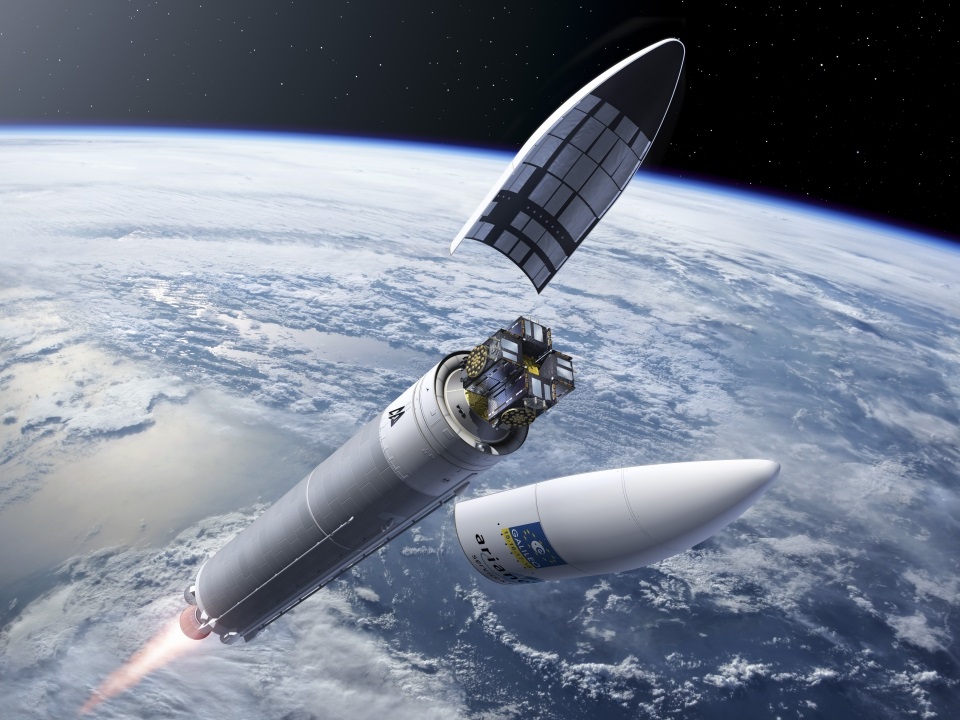
The last decade has reshaped how humanity approaches space. What was once the domain of national space agencies is now a rapidly expanding commercial frontier. Private companies are designing launch vehicles, deploying satellite constellations, planning lunar missions, and even developing private space stations.
This transformation is driven by innovation in propulsion systems, reusable rockets, advanced materials, artificial intelligence, and satellite miniaturization. Commercial exploration is no longer experimental—it is operational, competitive, and accelerating.
The Rise of Reusable Rocket Technology
One of the most transformative breakthroughs in commercial spaceflight is rocket reusability. Traditional launch systems were expendable, meaning rockets were discarded after a single mission. This made space access expensive and limited.
Companies like SpaceX pioneered reusable first-stage boosters with the Falcon 9 rocket. By landing and refurbishing these boosters, launch costs have dropped significantly. Similarly, Blue Origin developed reusable systems such as New Shepard to support suborbital missions.
Why Reusability Matters
-
Lower launch costs
-
Faster mission turnaround times
-
Increased mission frequency
-
Greater investment appeal
Reusability has shifted space exploration from isolated events to scalable operations.
Miniaturization and the Satellite Revolution
Another critical advancement is the rapid development of small satellites and CubeSats. Miniaturization allows commercial operators to launch constellations instead of single large satellites.
Satellite networks now power:
-
Global internet connectivity
-
Real-time Earth observation
-
Climate monitoring
-
Agricultural analytics
-
Maritime and aviation tracking
The rise of mega-constellations, such as those deployed by SpaceX under its Starlink program, demonstrates how private firms are reshaping global communication infrastructure.
Advanced Propulsion Systems
Propulsion innovations are expanding mission capabilities beyond low Earth orbit.
Electric and Ion Propulsion
Electric propulsion systems use ionized particles to generate thrust more efficiently than traditional chemical rockets. These systems:
-
Consume less fuel
-
Extend satellite lifespans
-
Enable deep-space missions
Methane-Fueled Engines
Methane propulsion is emerging as a cleaner and more efficient alternative to kerosene-based systems. It offers:
-
Reduced engine residue
-
Better performance for Mars missions
-
Potential for in-situ fuel production on other planets
These advancements support long-term goals such as lunar bases and Mars exploration.
Artificial Intelligence and Autonomous Systems
Artificial intelligence is now embedded across commercial space operations.
Applications Include:
-
Autonomous spacecraft navigation
-
Real-time anomaly detection
-
Orbital traffic management
-
Satellite image analysis
AI improves reliability while reducing human intervention. With increasing congestion in low Earth orbit, autonomous collision avoidance systems are becoming essential.
Private Space Stations and Commercial Habitats
The next frontier in commercial exploration involves building private orbital platforms. Companies are developing modular space stations that can support:
-
Scientific research
-
Pharmaceutical manufacturing
-
Space tourism
-
Microgravity experimentation
For example, Axiom Space is working on commercial modules that will eventually form an independent space station.
Commercial habitats may soon replace government-operated stations, opening new economic opportunities in orbit.
In-Space Manufacturing and Resource Utilization
Microgravity enables unique manufacturing processes impossible on Earth. Commercial firms are exploring:
-
Fiber optic production with higher purity
-
Advanced protein crystal growth
-
3D printing in orbit
Additionally, companies are studying asteroid mining and lunar resource extraction. While still in early stages, resource utilization could support fuel production and construction materials for long-term space infrastructure.
Space Tourism: A Growing Market
Commercial human spaceflight has moved from concept to reality. Suborbital flights and orbital missions are now offered by private companies.
Passengers can experience:
-
Weightlessness
-
Views of Earth from space
-
Short-duration orbital stays
Although currently expensive, costs are expected to decline as technology matures and competition increases.
The Economic Impact of Commercial Space
The global space economy is expanding rapidly. Commercial operators now generate significant revenue through:
-
Satellite services
-
Launch contracts
-
Data analytics
-
Defense partnerships
-
Tourism ventures
Investment in commercial space technology is attracting venture capital, institutional investors, and government contracts. This public-private synergy accelerates innovation.
Challenges Facing Commercial Exploration
Despite remarkable progress, several challenges remain:
-
Space debris management
-
Regulatory frameworks for private missions
-
Launch safety standards
-
Environmental concerns
-
Orbital congestion
Sustainable growth requires international coordination and responsible operations.
The Future Outlook
Commercial space exploration is transitioning from experimental innovation to industrial expansion. Upcoming developments may include:
-
Permanent lunar commercial hubs
-
Mars cargo missions
-
Fully reusable heavy-lift rockets
-
Autonomous orbital logistics systems
As launch costs continue to fall and technology advances, access to space will become increasingly routine.
FAQ:
1. How has commercial spaceflight reduced launch costs?
Reusable rockets, streamlined manufacturing, and increased competition have significantly lowered the cost per kilogram to orbit.
2. What role do private companies play compared to government agencies?
Private firms focus on operational efficiency, innovation, and commercialization, while government agencies often fund research and deep-space exploration initiatives.
3. Are reusable rockets completely safe?
Reusable systems undergo rigorous inspection and refurbishment between missions. So far, they have demonstrated reliability comparable to traditional rockets.
4. What is the importance of methane in modern rocket engines?
Methane burns cleaner than kerosene and is suitable for future missions where fuel may be produced on Mars or other celestial bodies.
5. How does AI improve satellite operations?
AI enables real-time monitoring, predictive maintenance, automated maneuvering, and large-scale data processing.
6. What industries benefit most from commercial space advancements?
Telecommunications, agriculture, defense, logistics, climate science, and media industries benefit significantly from satellite and launch innovations.
7. Is asteroid mining technically feasible?
While still in early research phases, advancements in robotics, autonomous systems, and propulsion suggest it may become viable in the future.